How to Track POTS Symptoms Before Your Next Doctor Appointment
If you have POTS and want to prepare for your next doctor appointment, the most useful things to track are your symptoms, symptom severity, heart rate changes, hydration, salt intake if it is part of your care plan, possible triggers, medications, and a short daily note about…

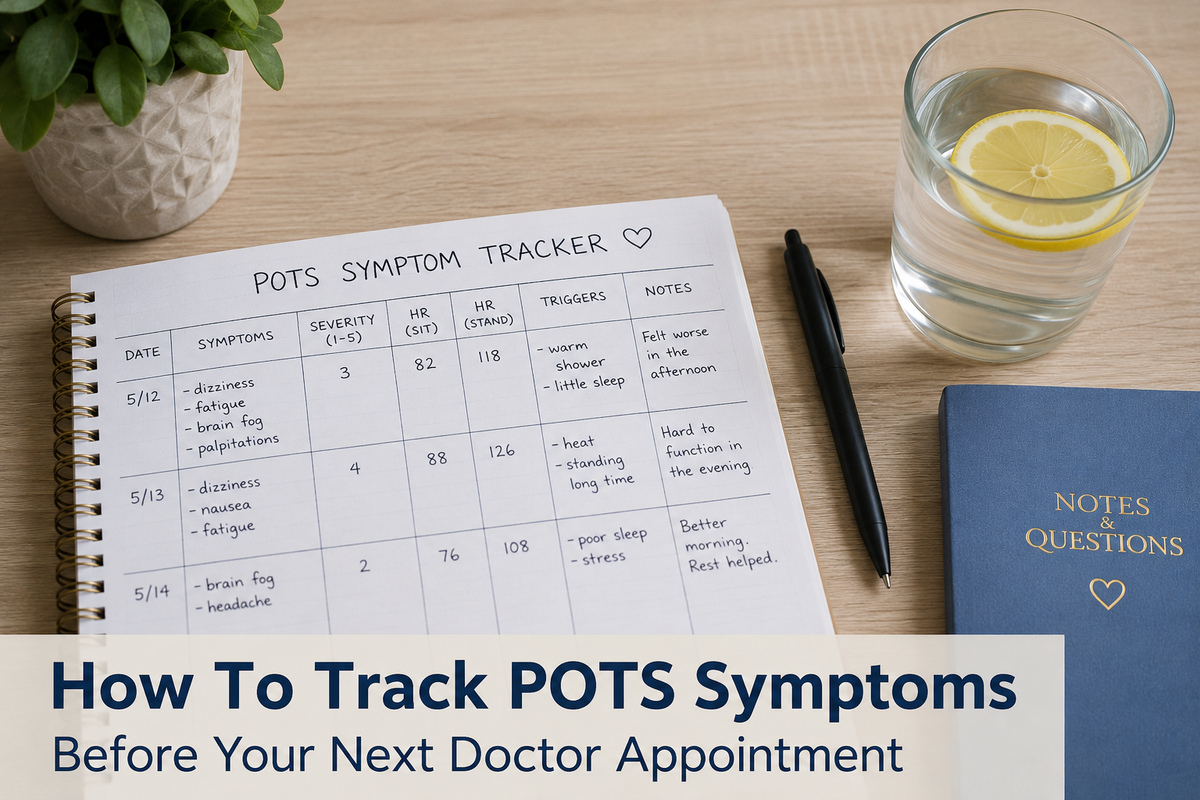
If you have POTS and want to prepare for your next doctor appointment, the most useful things to track are your symptoms, symptom severity, heart rate changes, hydration, salt intake if it is part of your care plan, possible triggers, medications, and a short daily note about flares or changes.
Tracking may help you notice patterns and walk into appointments with clearer notes.
POTS can be difficult to describe from memory, especially when symptoms change from day to day. Johns Hopkins Medicine and Cleveland Clinic both describe POTS as a condition associated with symptoms like rapid heart rate, dizziness, fatigue, brain fog, weakness, palpitations, and difficulty tolerating being upright. When symptoms vary, a simple POTS symptom tracker may help you stay organized and prepare more clearly for your next visit.
For a broader look at what living with POTS can feel like in daily life, start with What Living With POTS Really Feels Like.
This article is for educational and organizational purposes only. It is not medical advice.
Why Tracking POTS Symptoms Can Help Before A Doctor Appointment
Many people with POTS know they have been feeling worse, but struggle to explain exactly what changed.
A simple record may help you:
- notice patterns over time
- remember what happened during a flare
- show which symptoms affect daily life most
- bring clearer notes to a doctor visit
- reduce the pressure of trying to explain everything from memory
Tracking is not a medical tool. It does not diagnose or treat POTS. It is simply a way to organize what you are experiencing.
What To Track In A POTS Symptom Tracker
You do not need a complicated system. A short, repeatable checklist is usually more useful than detailed notes you cannot keep up with.
1. Main Symptoms
Start with the symptoms that affect you most.
Common examples include:
- dizziness or lightheadedness
- fatigue
- brain fog
- palpitations
- nausea
- shakiness
- weakness
- shortness of breath
- headaches
- feeling worse when standing
A short note is enough. For example:
Dizzy after standing for 10 minutes.
Brain fog worse in the afternoon.
Fatigue much worse after errands.
2. Symptom Severity
Record how strong the symptoms felt that day.
You can use a simple scale such as:
- 1 = mild
- 2 = noticeable
- 3 = moderate
- 4 = hard to function
- 5 = severe
This makes it easier to see whether symptoms are staying the same, improving, or getting worse.
3. Heart Rate Changes
Because POTS is closely tied to posture and upright symptoms, heart rate notes can be useful context.
You may want to record:
- resting heart rate
- sitting heart rate
- standing heart rate
- heart rate during a flare
- heart rate after activity, meals, or showers
The goal is not constant checking. The goal is to capture a few useful notes that help describe what was happening.
4. Hydration
Hydration often comes up in POTS management discussions. Dysautonomia International and Johns Hopkins both note that fluids may be part of symptom management for some patients, depending on clinical guidance.
If your clinician has already told you to pay attention to hydration, you may want to track:
- water intake
- electrolyte drinks
- days where intake was lower than usual
Keep this practical. Approximate notes are fine.
5. Salt Intake
Salt or sodium intake is another area some people track, but this should stay tied to medical guidance.
If your healthcare professional has recommended monitoring sodium or salt intake, you may want to note:
- estimated salt or sodium intake
- whether you followed your usual routine
- whether symptoms felt different that day
This is not something to adjust on your own based on an article. It is only a tracking category for people already discussing it with a clinician.
6. Possible Triggers
Many people with POTS notice that symptoms flare in certain situations.
Possible triggers to record include:
- heat
- long periods of standing
- showers
- poor sleep
- stress
- large meals
- exercise or exertion
- travel
- illness
- menstrual cycle changes
- medication changes
You do not need to be certain that something caused the flare. Just record what was happening around it.
Managing histamine symptoms alongside POTS? The same tracking principles apply — see Low-Histamine Diet Not Working? for how trigger stacking can affect symptoms.
7. Medications, Supplements, Or Changes
If anything changed recently, write it down.
That may include:
- a new medication
- a missed dose
- a dose change
- a supplement change
- a side effect you noticed
This can make follow-up appointments much easier to prepare for.
8. Questions And Notes For Your Doctor
Keep a running section for things you do not want to forget.
Examples:
- symptoms that have become more frequent
- anything new or unusual
- patterns you noticed
- questions about daily life or symptom changes
- notes about what seems to make symptoms worse or easier to manage
This part is often the most helpful when appointment time is limited.
A Simple POTS Tracking Checklist
If you want one clean format, this is enough for most days:
- date
- main symptoms
- symptom severity
- heart rate notes
- hydration
- salt intake, if relevant to your care plan
- possible triggers
- medications or changes
- one short daily note
- questions for your next appointment
That structure works well because it is simple enough to keep using.
How To Keep Tracking From Becoming Overwhelming
The biggest mistake is trying to track too much.
If you already deal with fatigue and brain fog, a detailed system may become one more thing to manage. A lighter system is usually better.
A good rule is this: track only what you are likely to review later.
If a note will help you prepare for an appointment or notice a pattern, keep it. If it adds stress without adding clarity, leave it out.
A Simple Way To Organize Your Notes
If you have been looking for a simple POTS symptom tracker spreadsheet, the POTS Tracker Spreadsheet can help you keep your symptoms, heart rate, hydration, salt intake, medications, triggers, and appointment notes in one place.
Frequently Asked Questions About Tracking POTS Symptoms
What information does a POTS specialist need at an appointment?
A POTS specialist typically wants: orthostatic heart rate data, symptom severity patterns over time, hydration and salt intake logs if relevant to your care plan, possible triggers, medication history, and a short summary of what has changed since your last visit. Bringing 2–4 weeks of structured notes can make appointments easier to discuss.
How long before an appointment should I start tracking?
Ideally, start tracking 2 weeks before your appointment. Four weeks gives a stronger pattern, but even a few days of notes can help if your appointment is soon. Some organized information is better than trying to remember everything from memory.
Should I use a wearable or track heart rate manually?
Both can be useful. A wearable can help you notice patterns across the day. Manual tracking can help you record specific moments, such as resting, sitting, standing, after meals, after showers, or during flares. Use whichever method is easiest to keep consistent.
What is the easiest way to track POTS symptoms?
The easiest way is to use a short daily checklist with symptoms, severity, heart rate notes, hydration, salt intake if relevant, possible triggers, medications, and questions for your doctor. Keep it simple enough that you can actually use it on low-energy days.
It is designed for personal tracking and organization only. You can use it to keep daily records, look back at patterns, and make doctor appointments easier to prepare for without starting from scratch each time.
This template is for personal tracking and organization only. It does not diagnose, treat, cure, or prevent any medical condition. Always speak with a qualified healthcare professional about symptoms, treatment, or medical decisions.
Medical background sources: Johns Hopkins Medicine, Cleveland Clinic, Dysautonomia International, NINDS.
You can also browse the full template page here: POTS Tracker →