Low-Histamine Diet Not Working? Your Personal Trigger Pattern May Be the Missing Piece
Generic food lists can help, but they may miss the real mix of food, timing, stress, heat, sleep, and other triggers behind your flares. You cut out fermented foods. You said goodbye to leftovers, tomatoes, chocolate, alcohol, and aged cheese.

Generic food lists can help, but they may miss the real mix of food, timing, stress, heat, sleep, and other triggers behind your flares.
You cut out fermented foods. You said goodbye to leftovers, tomatoes, chocolate, alcohol, and aged cheese. You printed the list, studied it, followed it carefully. And still, the symptoms came back.
That is one of the most disorienting experiences for anyone navigating histamine intolerance or MCAS. You did the work, and the work didn’t seem to hold. It’s easy to blame yourself in those moments, to wonder what you missed or what you’re still doing wrong.
But here’s what the food list doesn’t tell you: the real pattern may be far more personal than any generic list can capture.
This article is for tracking and educational purposes only. Histamine intolerance and MCAS are complex conditions that should be discussed with a qualified healthcare provider. A tracker cannot diagnose a condition, but it can help you organize patterns and bring clearer, more useful information to those conversations.
Why Generic Low-Histamine Lists Can Only Go So Far
Low-histamine food lists are a genuinely helpful starting point. For many people, reducing high-histamine foods brings noticeable relief, at least initially. But the further you go into this experience, the more you may notice that the lists don’t always match your reality.
That inconsistency is not your imagination. It’s biology.
Histamine levels in food are not fixed. They shift depending on how fresh the food is, how it was stored, how long it has been sitting out, and whether it was canned, aged, fermented, or processed. A piece of chicken cooked and eaten immediately may feel completely different from the same chicken eaten as a leftover the next day, even though it appears on the same list.
Beyond that, individual tolerance varies enormously. One person may eat something from the “avoid” category without any reaction, while another reacts to a food generally considered safe. And perhaps most confusing of all, the same person may tolerate a food on one day and react to it on another.
This is not a flaw in the diet. It’s a sign that the diet alone may not be telling the whole story.
The Missing Pattern May Not Be One Food
When symptoms keep returning despite careful eating, it’s natural to go hunting for the one food that is still slipping through. But what if the culprit isn’t a single food at all?
Reactions often don’t happen in isolation. They happen in context. And that context includes far more than what was on your plate.
Think about the last time you had a significant flare. Was it just the food? Or were you also exhausted, under stress, moving through unusual heat, or exposed to a strong fragrance or a new cleaning product? Did you sleep poorly the night before? Had you pushed yourself physically that day?
The missing piece may not be one “bad food.” It may be the pattern around the food: the quiet accumulation of everything else your body was already managing that day.
Food, Stress, Heat, Sleep, and Fragrance Can Stack Together
Some people find it helpful to think of their body’s tolerance as a threshold. On a calm, well-rested, low-stress day, that threshold sits relatively high. The same food that triggers a flare on a difficult day may feel completely manageable when the body has more capacity.
One small trigger may be tolerable on its own. But several triggers stacking together on the same day can push symptoms over the edge: a poor night of sleep, a stressful afternoon, a meal eaten late, lingering heat, and a food that was borderline to begin with.
Triggers that commonly interact with food include:
- Poor or disrupted sleep
- Emotional stress or anxiety
- Heat and humidity
- Intense or prolonged exercise
- Fragrances, perfumes, or chemical exposure
- Leftovers, fermented, canned, or processed foods
- Medications or supplements
- Hormonal fluctuations or the menstrual cycle
- Active illness or underlying inflammation
Recognizing this doesn’t make the situation more overwhelming. It actually makes it more navigable. When you know that stress plus a borderline food on a hot day is your personal combination for a flare, you can work with that knowledge rather than chasing a simpler answer that may not exist.
Why Tracking Beats Guessing
Memory is a generous narrator. Under the fog of a flare, it tends to highlight the most obvious suspect and quietly smooth over everything else. That is not a personal failing. It is simply how memory works under stress and fatigue.
This is exactly why tracking changes the picture.
A food list tells you what to avoid. A tracker shows what actually happens to you.
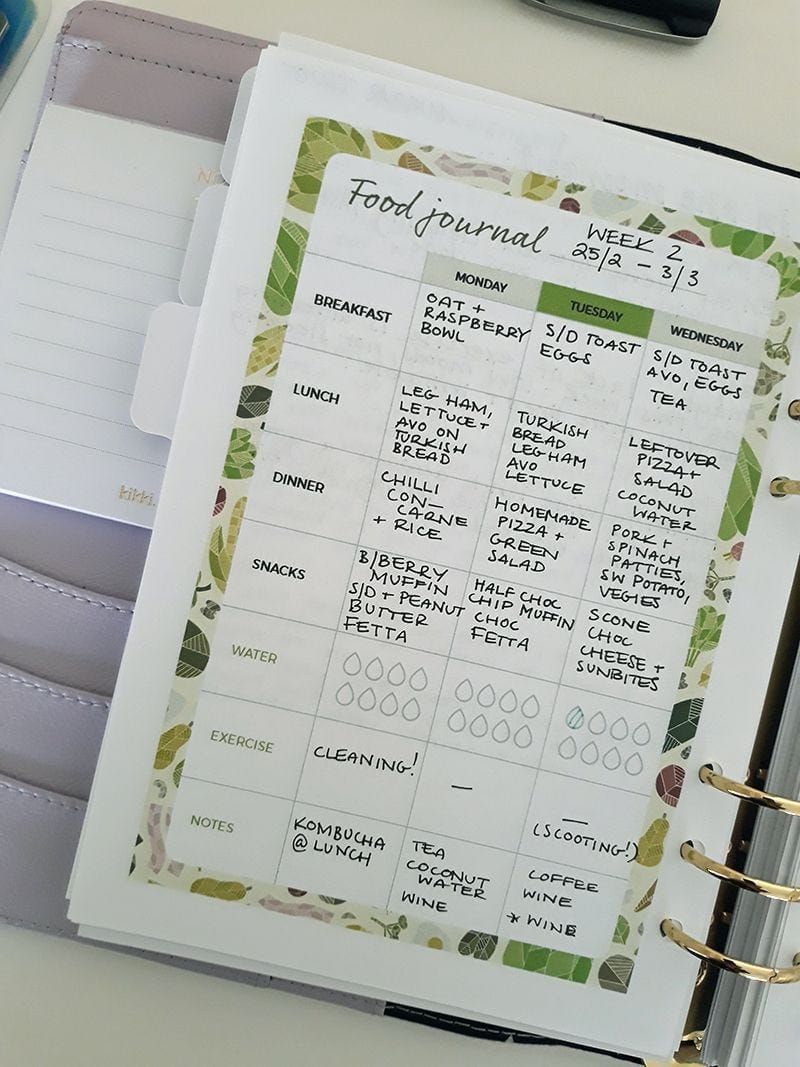
When you document consistently over days and weeks, patterns that were invisible to memory start to surface. You begin to see not just what you ate, but when you ate it, whether it was fresh or leftover, what else was happening that day, how long it took for symptoms to appear, and whether the same combination of factors keeps showing up before a flare.
That kind of information is something no generic list can give you. It is specific to your biology, your sleep habits, your stress levels, your environment. And it shifts the experience from frustrating guesswork into something you can actually examine and understand.
What to Include in a Histamine or MCAS Flare Log
A useful tracker doesn’t need to be complicated, but it does need to be consistent. The goal is to capture enough context around each meal and each symptom that patterns can eventually emerge.
Consider tracking:
- Meal or food item — what you ate and roughly how much
- Time eaten — timing can matter as much as the food itself
- Food preparation — fresh, leftover, fermented, canned, aged, or processed
- Symptoms — what you experienced, described specifically
- Symptom start time — how long after eating did symptoms appear?
- Severity — a simple 1 to 10 scale creates comparable data over time
- Stress level — even a rough low, medium, or high rating is helpful
- Sleep quality — the night before can affect the day significantly
- Heat or weather — environmental conditions are easy to overlook
- Exercise — type and intensity
- Fragrances or chemical exposure — cleaning products, candles, perfumes, smoke
- Medications or supplements — some can affect histamine processing
- Hormonal or menstrual cycle notes — for those who find this relevant
- General notes — anything unusual that doesn’t fit another category
Over time, these entries stop being isolated data points. They become a conversation with your own body, one that is far more nuanced than any food list.
How a Trigger Log Can Help at Medical Appointments
One of the quieter frustrations of living with histamine intolerance or MCAS is the appointment itself. You sit down, your provider asks what has been happening, and suddenly the weeks of reactions compress into a vague and hard-to-articulate summary. You know something is wrong. You struggle to explain exactly what, or when, or what seems to make it worse.
A clear, consistent log changes that dynamic.
Instead of relying on memory, which under chronic symptoms is often unreliable, you arrive with documented patterns. You can show timing, severity, frequency, and the non-food factors that appeared before flares. That information gives your provider something concrete to work with, and it may open up conversations that a general symptom description simply cannot.
A log won’t diagnose your condition. But it can help you and your provider understand what your body is doing more clearly, and that clarity has real value.
Final Takeaway: The Goal Is Clarity, Not Food Fear
A low-histamine diet may help some people considerably. But for many, it is not the complete answer on its own. If symptoms still feel random and unpredictable despite careful eating, that randomness may be a signal: not that you are doing something wrong, but that the pattern you are looking for is more complex and more personal than any food list can capture.
The goal is not to live in fear of every meal. It is not to build a longer and longer list of foods to eliminate. It is something quieter and more empowering than that: understanding what your body is reacting to, when it tends to happen, and what else may be contributing.
That understanding won’t come all at once. But with consistent, compassionate attention to your own patterns, it becomes possible, one entry at a time.
A structured MCAS Histamine Flare Detective Tracker can make this process easier by keeping food, symptoms, timing, severity, and possible non-food triggers in one place. Instead of guessing from memory, you can review patterns over days or weeks and bring clearer, more organized notes to your healthcare provider