Why Bad Weather Really Does Seem to Make Fibromyalgia Worse

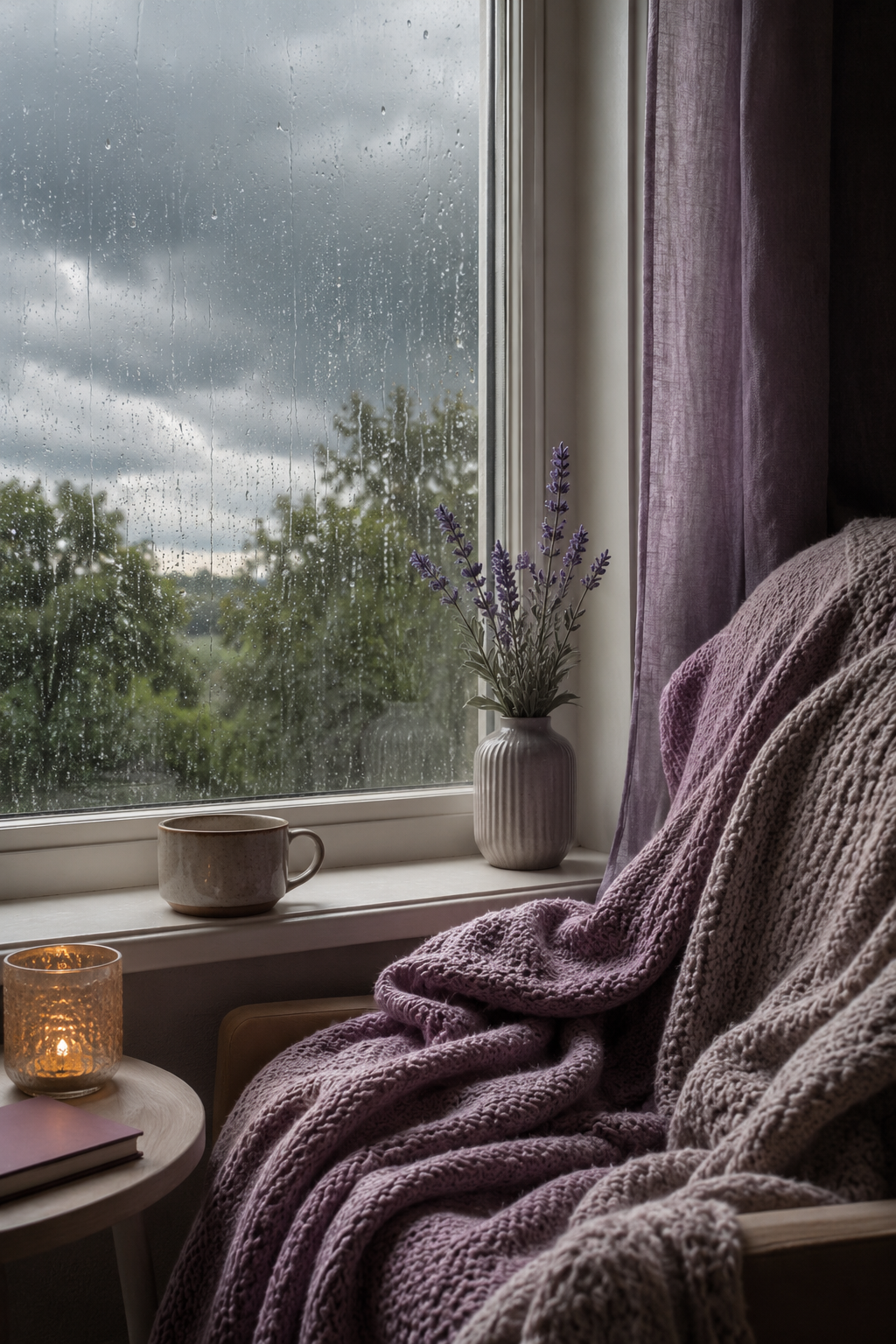
You feel it before the weather app does. A dull ache moves into your shoulders and hips a day before a front rolls in, and by the time the rain starts, you already knew it was coming. Then you mention it to someone — a doctor, a coworker, a relative — and get the same tired response: that's just coincidence.
This article is for educational and organizational purposes only. It is not medical advice.
Here is what the research actually shows: you are not imagining it. Studies tracking thousands of people with chronic pain conditions, fibromyalgia included, against real, location-specific weather data have found a measurable link between weather patterns and pain flares. It is not dramatic, and it does not show up the same way in everyone, but it is real.
What the Research on Weather and Pain Actually Shows
The largest piece of evidence comes from a study called Cloudy with a Chance of Pain, run by the Centre for Epidemiology at the University of Manchester with Versus Arthritis. More than 13,000 people across the UK used a smartphone app to log daily pain for months, while the app matched each entry to real weather data from their location using GPS. The sample included several chronic pain conditions, fibromyalgia among them, though arthritis made up the largest share.
The results held up at that scale. High humidity was the single strongest weather factor linked to worse pain, with low atmospheric pressure and stronger wind adding to it. Temperature alone showed no clear pattern across the group. On days that were humid, windy, and low pressure together, people with long-term pain conditions were around 20 percent more likely to report a high-pain day — baseline odds of roughly 5 in 100 rose to about 6 in 100. A real shift, not an enormous one, matching what many people with fibromyalgia already suspected: weather is a factor, not the whole story.
A separate study looked specifically at fibromyalgia: 48 people followed for 30 days in Norway, reporting pain and mood three times daily by phone, with weather data gathered independently and without participants knowing it was part of the study — which rules out the simplest objection, that people notice bad weather only on days they already expect to hurt. Lower pressure and higher humidity were linked to increased pain intensity; temperature alone made no difference. The effect was real but modest, and about one in six participants showed the opposite pattern, with lower baseline anxiety found in that subgroup.
Why an Already-Sensitized Nervous System Might Feel It More
Fibromyalgia does not involve damage to joints or tissue the way arthritis does. Research points instead to central sensitization — altered pain processing in the spinal cord and brain, not the tissue sending the signal. Ordinary input most people never register at all can get processed and felt as pain, partly because the body's own pain-dampening system is not working at full strength.
That framework offers a plausible reason weather might register more strongly in fibromyalgia. Pressure shifts change the pressure inside joints and soft tissue slightly, all the time, for everyone. In a nervous system that has turned up its own gain on pain signals, a shift that would normally stay below the threshold of notice may cross it. This is not a fully mapped mechanism — researchers have not pinned down the exact chain between a pressure drop and a flare — but it fits how fibromyalgia pain behaves: small inputs, amplified.
Weather is not the whole explanation for fibromyalgia pain. It is one input into a nervous system that was already amplifying signals before the front ever arrived.
Not Confirmation Bias, But Not Universal Either
It is a fair question. If you already believe weather affects your pain, wouldn't you just notice the days that confirm it and forget the rest? That is the kind of bias the better studies were designed to catch. The fibromyalgia study above worked because participants reported pain in real time, several times a day, with no idea weather was being tracked — no chance to reshape memory afterward to fit a theory. The pattern held anyway.
At the same time, this is not universal or simple. About one in six people in that study felt the opposite of the majority. The Manchester researchers describe the effect as real but modest, not something that explains every flare. Weather is probably one contributor among several — sleep, activity, stress, hormonal cycles — not a single cause every time. Whether it is meaningful for your body specifically is something a group average cannot answer. Only your own data can.
What to Note If You Want to Check Your Own Pattern
You do not need a weather station or a science background. A phone weather app and a simple daily note are enough to see whether your pain tracks with pressure and humidity changes, or whether something else is driving it more.
- Daily pain level, on a simple 0–5 scale, using the same scale every day
- A one-line weather note — general conditions, and whether a front or storm was moving in
- Timing — did the ache show up before the weather changed, during it, or after
- One other likely factor for that day, such as poor sleep, a busy day, or stress, so weather is not given more credit or blame than it deserves
A couple of weeks of notes like this is usually enough to show whether your own pattern lines up with the research, or looks different.
If you want a place to keep this alongside your other symptoms instead of scattered notes, the CareLog Fibromyalgia Pain & Flare Tracker Bundle has a daily log built for this kind of pattern-spotting — pain, weather, sleep, and other triggers in one sheet, with a summary view for appointments.
Get the Fibromyalgia Pain & Flare Tracker Bundle → PayhipFor personal tracking and organization only.
Is the connection between weather and fibromyalgia pain actually real, or is it confirmation bias?
It appears to be real, not a trick of memory. The strongest fibromyalgia study collected pain reports in real time, several times a day, without participants knowing weather was tracked — ruling out selective memory as the explanation. Larger studies across thousands of people with chronic pain found a similar pattern, modest but real enough to hold up under conditions designed to catch bias.
Does every person with fibromyalgia react to weather the same way?
No. While most participants in the fibromyalgia study had more pain on lower-pressure, more humid days, around one in six showed the opposite pattern. Individual variation is part of the picture here, not an exception to it.
Can I do anything to prepare for a weather-related flare?
There is no proven way to prevent one, and it is worth being cautious of anyone who claims otherwise. What tracking can offer is advance notice — if your pattern shows pain building before a pressure drop, you may be able to plan lighter days around it.
Does tracking weather and pain replace seeing my doctor?
No. A log is a personal organization tool, not a diagnosis or a treatment plan. It helps you notice patterns and gives your doctor something more specific to work with than "I feel worse sometimes." Decisions about your fibromyalgia care should always come from a qualified healthcare professional.
What should I do if my pain suddenly gets much worse?
Contact your healthcare professional, especially if the change is sudden, severe, or comes with new symptoms unusual for you. Weather may explain a gradual pattern over weeks, but a sharp or unexplained change should not be assumed to be weather without checking with a doctor.
Sources:
University of Manchester / Versus Arthritis — Cloudy with a Chance of Pain (smartphone study on weather and chronic pain): manchester.ac.uk
PLOS ONE — Blame it on the weather? The association between pain in fibromyalgia, relative humidity, temperature and barometric pressure: journals.plos.org
National Center for Biotechnology Information (NIH) — Fibromyalgia, StatPearls (central sensitization and pain processing): ncbi.nlm.nih.gov